
Games
Bastard Brag is a fast-paced tactical card game based on traditional Brag.
Build the strongest 3-card hand possible by trading with a shared table of cards. Every decision reveals information to your opponents, and one well-timed knock can force everyone else into making difficult final trades.
The goal is simple
Finish with the best Brag hand
- Receive 3 private cards
- 3 shared cards are placed in the centre
- Two cards are face up, one is face down
- On your turn trade 1 card or all 3 cards
- Every player must trade at least once
- After trading, players may choose to knock
- Knocking locks your hand and gives everyone else one final turn
- Best Brag hand wins
- Prize pool is split based on finishing position
Every hand consists of
- 3-6 Players
- 3 Private Cards Per Player
- 3 Shared Cards
The shared cards are available for everyone when it is their turn, they are arranged on the table in the following pattern.
- Face Up
- Face Down
- Face Up
When it is your turn you have the option to take one of the following actions
- Trade one card from your hand with one on the table. You do this by selecting a card from your hand and one from the board then pressing the "Trade One" button.
- Trade all 3 of your cards with those cards that are on the table. You do this by choosing one of the cards from your hand to be placed face down and then pressing the "Trade All 3" button.
- Knock, if eligible.
The face-down card always remains hidden. If a player chooses to trade it the new card that is added to the table is also placed face down.
Hands are ranked according to standard Brag rules
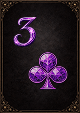
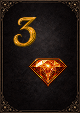
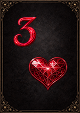
Prial (3 of a kind)
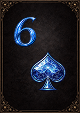
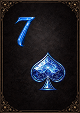
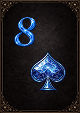
Straight Flush
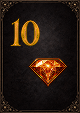
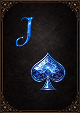
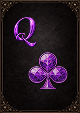
Straight



Flush
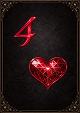
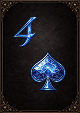
Pair
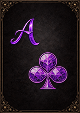
High Card
In this version of brag there are some changes to hand rankings that may differ from other Brag or Poker like games
- A prial of 3's will beat all other prials
- A23 is the best straight, followed by AKQ
Tie breaks within identical hand ranks, like flushes, will be determined by countdown
WINS
LOSES
Suit ranking does not exist, so two identical hands will tie.
On your turn you may
Trade 1 card
Take one card from the table and replace it with one from your hand.
The replacement card must keep the same orientation.
Examples
- If you take a face-up card, you must place a face-up card back.
- If you take the face-down card, you must also place your card back face-down.
Trade all your cards
Take all three cards from the table.
Your entire hand becomes the new table.
The face-down card remains in the centre position while the two outer cards remain face up.
This can be a powerful move that completely changes the options available to everyone else, or a complete hail mary when you have limited options left.
Knock!
If you are eligible to do so, see next section for more information.
Every player must make at least one trade before they are allowed to knock.
Once everyone has traded once, and if no-one else has done so, you can choose to knock instead of trading any more cards.
When you knock your hand is locked in, you'll not take another turn and every other player must take exactly one more turn.
Once play gets back to you the hand is over.
It is very important to remember that only one person can knock, this means that if somone knocks before you and you have a hand, you have to trade, even if you don't want to.
Once the knock sequence is complete the hand is over.
- All hands are revealed
- Players are ranked from best to worst Brag hand
- Prize money is distributed based on finishing position
Pizes for 3 player games
- 1st: 66%
- 2nd: 34%
Pizes for 4+ player games
- 1st: 50%
- 2nd: 30%
- 3rd: 20%
Tied players share the prizes for the positions they occupy.
- The face-down card creates uncertainty and hidden opportunities.
- Trading all three cards can dramatically improve your hand or completely disrupt the table.
- Watch what opponents take and discard.
- Sometimes knocking quickly is stronger than chasing a slightly better hand.
- Strong information can be just as valuable as strong cards.
- Keeping a strong pair to stay out of the bottom rankings is sometimes the best strategy.
Big2 is a game where players race to get rid of all their cards.
Play singles, pairs, trips, or 5-card poker-style hands. Each play must beat the previous hand of the same type.
The goal is simple
Be the first player to play all your cards
Once someone has played all of their cards the hand is over.
All cards have their own rank
Cards are ranked from low to high
3, 4, 5, 6, 7, 8, 9, 10, J, Q, K, A, 2
Suits are also ranked from low to high
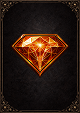
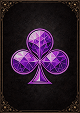
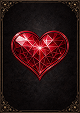
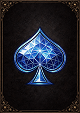
LOW  HIGH
HIGH
This means 3♦ is the worst card in the game, and 2♠ is the best card in the game.
WORST
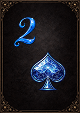
BEST
- Receive 13 cards
- Play singles, pairs, trips, or 5-card hands
- You must follow the current hand type
- If you cannot or do not want to play, you may pass
- Passing does not remove you from the round
- When everyone else passes, control returns to the last player who played
- First player to play all of their cards wins
- However, you may still win points depending on how many cards you have left as everyone pays everyone else
In the first hand or when the winner of the previous game is no longer dealt in
- The player with 3♦, or the worst available card, starts the first hand
- The opening play must include that card
Otherwise
- The previous hand's winner will play first
- They can play any valid hand they want
Every hand consists of
- 3-4 Players
- 13 Cards Per Player
The first hand begins with the player holding the lowest card, usually the 3♦.
That player starts
The opening play must include that card.
This can be any valid hand type; so if the lowest card is the 3♦, examples include
A single card
A pair of 3's
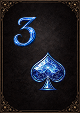
Trip 3's
Any valid 5 card hand that includes the 3
After that, play follows in the set direction. Learn more in the upcoming section.
Once a hand type has been played, every following player must play the same type until everyone else passes.
For example, if a pair is played, you must play a stronger pair or pass.
The hand begins with the player who won the previous hand.
They can play anything they want.
This can be any valid hand type.
- Single Card
- Pairs
- Trips
- Valid 5-card hands
After that, play follows in the set direction. Learn more in the upcoming section.
Once a hand type has been played, every following player must play the same type until everyone else passes.
For example, if a pair is played, you must play a stronger pair or pass.
Clockwise
Hands will be played most of the time in a clockwise fashion, as is with most other card games.
These times include
- The very first hand
- All hands that do not have the player who won the previous hand
- Every two hands if the winner stays at the table
Anti-clockwise
When certain conditions are met, the direction of play reverses.
These times include
- Where the winner from the last hand is still playing and you just played a clockwise hand
Singles
A single card is beaten by a higher card.
LOSES
WINS
LOSES
WINS
Pairs
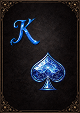
A pair is beaten by a higher pair.
If two pairs have the same rank, the pair with the highest suit wins.
LOSES
WINS
LOSES
WINS
Trips
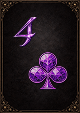
Trips are three cards of the same rank.
Higher ranked trips beat lower ranked trips.
LOSES
WINS
5-card hands are ranked from strongest to weakest
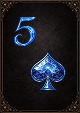
Straight Flush
Four of a kind
Full House
Flush
Straight
Only 5-card hands can beat other 5-card hands.
A stronger 5-card category always beats a weaker one.
- Flush beats Straight
- Full House beats Flush
- Four Of A Kind beats Full House
- Straight Flush beats Four Of A Kind
To make Four Of A Kind a valid hand another card is added to the hand as a kicker.
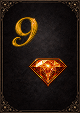
Straights are ranked using Big 2 card order.
Available straights from strongest to weakest
If two straights have the same card values, suits are compared from the highest card down.
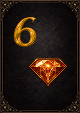
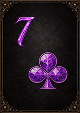
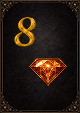
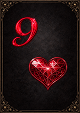

WINS - 10 hearts is higher than the 10 diamonds
LOSES - 10 diamonds is lower than the 10 hearts
A flush is five cards of the same suit.
Flushes are compared by card value first, counting down from the highest card.
LOSES - K is lower than a A
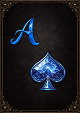
WINS - A is higher than a K
If the first card values are the same, then the next value is compared.
LOSES - T is lower than a Q
WINS - Q is higher than a T
If all the card values are the same, the suit decides the winner.
LOSES - hearts lose to spades
WINS - spades beat hearts
On your turn you may either play or pass.
Play
You must play the same hand type as the current hand, and your hand must beat it.
If you have control of the board, you may play any valid hand type.
Pass
If you cannot or do not want to play, you may pass.
Passing does not remove you from the round. You may still play later if the turn comes back to you.
Control
If every other player passes, the last player who played gains control.
When you have control, you may start again with any valid hand type.
If the next player has only one card remaining, you must try to stop them from going out.
This means you may be forced to play when you would normally be allowed to pass.
If the current hand is a single
You must play your best legal single card, even if to breaks one of your pairs or 5 cards hands.
If the current hand is a pair, trips, or 5-card hand
You can choose to play or pass as the next player has no play to make.
If you have control
You may play a multi-card hand to stop the next player from playing their final card.
If you choose to play a single, it must be your best single card.
The hand ends when one player has no cards remaining.
- The first player to empty their hand wins
- Remaining players work out their points by the amount of cards left in their hands
- The cards remaining will also determine their multiplier
- 1-6 cards x1
- 7-9 cards x2
- 10-13 cards x3
- The fewer cards you have left, the more points you'll make from the other players
Once everyone's points are determined everyone pays everyone the difference.
For example, if Player A wins and Player B has 3 cards left, Player C has 7 cards left and Player D has 11 cards left
- Player A: 0 points
- Player B: -3 points
- Player C: -14 points
- Player D: -33 points
Player A will get 50 points
- 3 points from B
- 14 points from C
- 33 points from D
Player B will get 38 points
- 3 points to A
- 11 points from C
- 30 points from D
Player C will pay 6 points
- 14 points to A
- 11 points to B
- 19 points from D
Player D will pay 82 points
- 33 points to A
- 30 points to B
- 19 points to C
- Try to keep control of the board when possible.
- Pairs, trips, and 5-card hands can be useful for avoiding dangerous single-card battles.
- Do not waste your 2s too early unless it wins you control at the right time.
- If another player has one card left, avoid playing weak singles.
- Sometimes playing more cards is better than playing stronger cards.
- Watch what hand types other players pass on.
- Passing can be tactical if it lets someone else waste a stronger card or lets you keep stronger cards for later.
Flips is a fast-paced poker strategy game where every player starts with the same challenge
Turn 8 cards into 4 winning hands
Build four separate 2-card Hold'em hands, then decide when to play each one across four rounds of poker. Every decision matters because once a hand has been used, it can't be used again.
- Receive 8 private cards
- Divide them into 4 separate 2-card hands
- Those hands are locked in and can not be changed later
- A new poker board is dealt each round
- You will see the Flop before choosing a hand
- Use each hand once and only once
- Best Texas Hold'em hand wins the round, after the turn and the river are revealed
- Play 4 rounds
- Win as many rounds as possible
Every hand consists of
- 2-4 Players
- 8 Private Cards Each
- 4 Rounds
At the start of every hand
- Each player pays the stake for all 4 rounds
- All money goes into a shared pot
- The pot is divided into 4 equal round prizes
- One prize is awarded each round
Each player receives 8 private cards.
Before play begins, you must divide those cards into 4 separate 2-card hands.
For example if you were dealt the following hand.
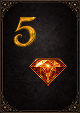
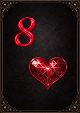
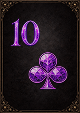
You might make up your hands like this.
Hand 1
Hand 2
Hand 3
Hand 4
These become your four playable Hold'em hands for the rest of the game.
You have a limited amount of time to complete your setup.
If time expires, any unassigned cards will automatically be paired together.
These hands can not be changed once they are locked in.
Each round uses a completely new poker board.
At the start of the round
- A Flop (3 community cards) is revealed
- All players secretly choose one unused 2-card hand
- Once chosen, that hand cannot be used again
You must decide which hand gives you the best chance against the current board.
Sometimes a premium hand is worth saving for later.
Sometimes a perceived weaker hand becomes powerful because of the draws on the flop.
Once all players have chosen
- The Turn card is revealed
- The River card is revealed
Your chosen 2-card hand combines with the 5 community cards exactly like standard Texas Hold'em.
The game automatically determines your best possible 5-card poker hand.
The player(s) with the best hand will win the round.
Hands are ranked according to standard poker rules
The strongest poker hand wins the round prize.
Royal Flush
Straight Flush
Four Of A Kind
Full House
Flush
Straight
Three Of A Kind
Two Pair
One Pair
High Card
If multiple players tie for the best hand, the round prize is split equally.
Flips is not just about receiving good cards, you must decide:
- How to divide your 8 cards into 4 hands
- Which cards to keep together
- Which hand to play on each flop
- Whether to save your strongest hand for later rounds
A pair of Queens might dominate one board but be wasted on another.
A suited connector might look weak during setup but become the perfect choice when the flop arrives.
Nominations is a trick-taking game where players predict exactly how many tricks they will win.
Each game is played over seven rounds. The number of cards dealt increases by one each round, beginning with one card and ending with seven cards.
The goal is simple
Make accurate bids and finish with the highest score
You score points for every trick you win, with a valuable bonus awarded whenever your final number of tricks exactly matches your bid.
- Played by 2-4 players
- The game lasts seven rounds
- Round 1 uses one card per player, increasing to seven cards in Round 7
- A trump suit is selected at the beginning of every round
- Before playing, each player bids how many tricks they expect to win
- The final bidder cannot make the total number of bids equal the number of tricks available
- Players must follow the suit that was led whenever possible
- The highest trump wins the trick
- If no trump is played, the highest card of the led suit wins
- Each trick won is worth 1 point
- Matching your bid exactly earns an additional 10 points
- The player with the highest score after seven rounds wins
The number of cards dealt changes each round.
- Round 1: 1 card per player
- Round 2: 2 cards per player
- Round 3: 3 cards per player
- Round 4: 4 cards per player
- Round 5: 5 cards per player
- Round 6: 6 cards per player
- Round 7: 7 cards per player
Because the number of cards increases, later rounds contain more tricks and allow players to make larger bids.
At the beginning of each round:
- Each player receives the number of cards shown by the current round
- A separate card is drawn to determine the trump suit
- The bidding stage begins
The dealer button moves between rounds.
The player to the left of the button acts first during the bidding stage and leads the first trick.
A card is revealed at the start of each round.
The suit of that card becomes trumps
Trump cards are stronger than cards from every other suit when deciding the winner of a trick.
- Any trump card beats any non-trump card
- If several trump cards are played, the highest trump wins
- If no trump is played, the highest card of the suit that was led wins
The value of the revealed card does not affect play; only its suit is used.
Before any cards are played, every player must predict how many tricks they will win during the round.
Your bid may be any whole number from zero up to the number of cards in your hand.
- In Round 1, bids range from 0-1
- In Round 4, bids range from 0-4
- In Round 7, bids range from 0-7
A bid of zero means you are predicting that you will not win any tricks.
Once every player has bid, the card-playing stage begins.
The final player to bid has one additional restriction.
The total of all bids cannot equal the number of tricks available
For example, during Round 4, there are four tricks available.
If the first three players have bid 1, 1 and 0, their bids total 2.
The final player cannot bid 2, because that would make the combined bids equal 4.
This rule guarantees that at least one player will finish the round with a different number of tricks from their bid.
The first player leads by playing any card from their hand.
Play then continues around the table, with every other player contributing one card.
You must follow suit whenever possible
The suit of the first card played is known as the lead suit.
- If you have a card of the lead suit, you must play one
- If you do not have a card of the lead suit, you may play any card
- You are not required to play a trump when you cannot follow suit
- You are not required to beat cards that have already been played
Following suit is compulsory.
For example, if the first card played is a club
- Every player holding at least one club must play a club
- A player with no clubs may play a card from any suit
A player cannot choose to play a trump or discard another suit while still holding a card of the lead suit.
Once every player has played one card, the trick is awarded.
If one or more trump cards were played
The highest-ranking trump card wins.
If no trump cards were played
The highest-ranking card of the lead suit wins.
Cards from other non-trump suits cannot win the trick.
The winner of the trick leads the first card of the next trick.
Hearts are trumps and the first player leads 10♣.
Player A - Lead Card
Player B - Follows Lead

Player C - Trump Card
Player D - Follows Lead
Player C wins the trick.
Although 2♥ is lower than all of the clubs, it is a trump card and therefore beats every non-trump card.
The winner of each trick leads the next trick.
They may lead with any remaining card in their hand.
The suit of this new card becomes the lead suit for that trick.
This continues until every player has played all of the cards dealt for the round.
At the end of a round, each player compares their bid with the number of tricks they actually won.
Every trick won is worth 1 point
An exact bid earns a further 10 points
- Bid 0 and win 0 tricks: 10 points
- Bid 1 and win 1 trick: 11 points
- Bid 3 and win 3 tricks: 13 points
- Bid 2 and win 1 trick: 1 point
- Bid 0 and win 2 tricks: 2 points
You still receive points for tricks won when your bid is incorrect, but you do not receive the 10-point accuracy bonus.
Bidding zero can be valuable, especially in rounds where you hold weak cards.
To complete a zero bid successfully you must not win a trick.
A successful zero bid earns 10 points.
However, accidentally winning even one trick means the bid is incorrect and you receive only the points earned from the tricks you won.
A round ends when every card dealt during that round has been played.
- Each player's tricks are counted
- Points are added to the scoreboard
- The dealer button moves
- The next round begins with one additional card per player
- A new trump suit is selected
Scores carry forward throughout the entire game.
The game ends after Round 7 has been completed and scored.
- The player with the highest total score wins
- If several players share the highest score, they are joint winners
- Where the game uses a prize pot, it is divided equally between the joint winners
Players have a limited amount of time to complete each action.
- 20 seconds to make a bid
- 20 seconds to play a card
If the timer expires during bidding, a bid is selected automatically.
If the timer expires during play, one of the player's legal cards is selected automatically.
An automatically played card will still follow suit whenever the player is able to do so.
- Do not automatically bid based only on your highest cards; consider the trump suit and your ability to follow other suits
- Short suits can be useful because they may allow you to play trump cards later in the round
- Aces are strong, but they may still lose when another player is able to play a trump
- Keep track of which trump cards have already been played
- When bidding zero, try to avoid being left with a card that may be forced to win the final trick
- When you have already reached your bid, your priority may change from winning tricks to avoiding them
- When you still need tricks, consider whether leading a strong card or a suit in which others may be short gives you the best chance
- Remember that an exact bid is usually more valuable than winning one unnecessary extra trick
Ojack is a fast-paced hybrid card game where every hand plays two games at once.
- Omaha Poker
- Blackjack
Each hand produces two winners and two pots. Choose smart card swaps to affect both outcomes at the same time.
Select up to 3 cards per turn to trade in to try to improve your hand.
- Play Omaha and Blackjack at the same time
- See the Flop, then swap up to 3 cards
- See the Turn, then swap up to 3 cards again
- See the River, then winners are decided
- Omaha uses 2 from hand + 3 from board
- Blackjack uses your leftover cards after Omaha
- If nobody wins Blackjack, the pot rolls over
Every hand will have
- Players: 2-4
- Cards per player: 5 private cards
- Community cards: 5 (Flop, Turn, River)
- Rounds: 2 swap rounds + final reveal
At the start of every hand
- Each player pays a base stake
- All money goes into a shared pot, which is automatically split
- ½ Omaha Pot
- ½ Blackjack Pot
Each hand has two separate objectives
- Win the Omaha Pot by making the best Omaha hand
- Win the Blackjack Pot by making the best Blackjack total without going over 21
You can win just Omaha, just Blackjack, or both pots in the same hand.
At the start of the hand
- Each player is dealt 5 private cards
- 5 community cards are dealt facedown to the table
- The Flop (3 community cards) is then revealed
Your best current Omaha hand and Blackjack total will update as the community cards are revealed.
You have a limited time to act in Round 1.
- You may swap 0-3 cards
- Or you can stand pat (swap nothing)
Each swapped card costs a small card stake and is replaced with a random new card from the deck.
When the timer ends (or everyone has acted), swaps are locked in.
The Turn (4th community card) is revealed.
- You may swap 0-3 cards again
- Or stand pat
This is your final chance to improve your hand before the River.
The River (5th community card) is revealed.
- No more swaps
- No more decisions
The game now determines winners for Omaha and Blackjack.
Your Omaha hand is created using
- Exactly 2 cards from your hand
- Exactly 3 cards from the board
The game automatically selects the combination that gives you the best possible Omaha hand.
You finish the hand with the following cards
And the board is
Your final combination is
OMAHA - Flush
BLACKJACK - 12
Only the two hole cards that produce your best Omaha hand are used.
The ace and king of diamonds are used in this example, because, when combined with three diamonds from the board, they produce your best Omaha hand: An ace-king-high flush.
This logic is used if you have multiple ways to make the same straight too.
Once your best Omaha hand is locked in
- The 2 hole cards used for Omaha can not be used in your blackjack hand
- The remaining cards become your Blackjack hand.
- Aces are valued at either 11 or 1, whichever value will not bust your hand.
The highest valid total wins the Blackjack pot, ties will split the pot.
Each hand awards two pots
- Omaha Pot - Best Omaha hand wins (ties split evenly)
- Blackjack Pot - Best Blackjack total ≤ 21 wins (ties split evenly)
If nobody wins the Blackjack pot
- The Blackjack pot is not paid out
- It rolls over into the next hand
- The next hand becomes a Rollover Hand
During a rollover hand, players must continue until both pots are won.
- Swapping cards affects both Omaha and Blackjack
- Strong Omaha cards can weaken your Blackjack leftovers
- Sometimes improving Blackjack is better than chasing a small Omaha upgrade
- Rollover hands can become very valuable